
New Colonoscopy Technology Could Make Colon Examinations Less Invasive: What You Need to Know
A new approach to colon examination is attracting attention thanks to advances in medical imaging. Traditionally, colonoscopy involves inserting a long, flexible tube equipped with a camera into the rectum to examine the large intestine. Although this procedure is highly effective, many people find it uncomfortable or frightening.
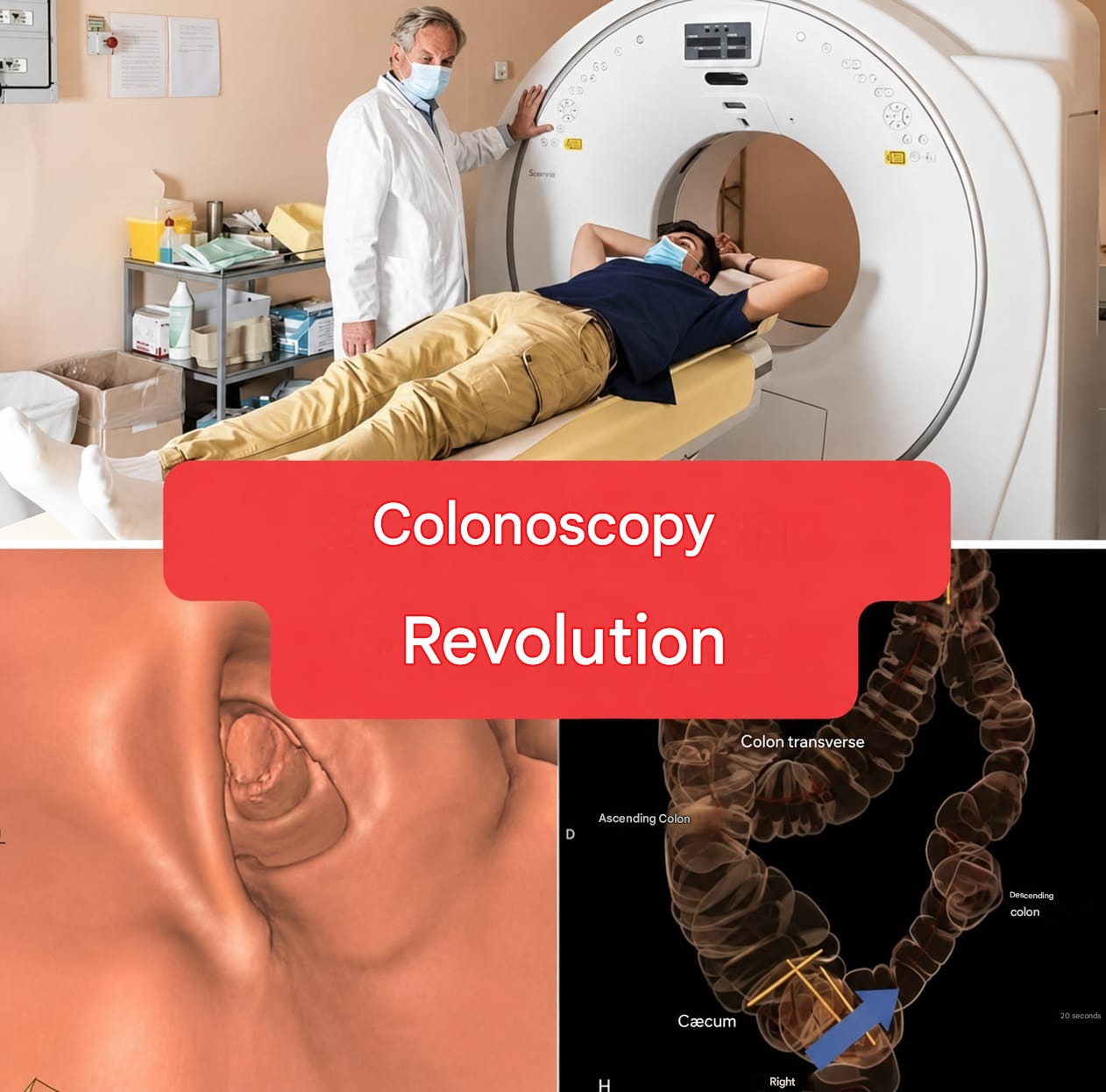
Today, a modern alternative called Virtual Colonoscopy (CT Colonography) offers another way to examine the colon without using a conventional colonoscope.
What Is Virtual Colonoscopy?
Virtual colonoscopy is an advanced medical imaging technique that uses a CT scanner and specialized computer software to create detailed images of the inside of the colon.
Instead of inserting a camera through the entire large intestine, doctors use X-ray technology to capture images from different angles. These images are then combined to produce a detailed three-dimensional view of the colon.
This allows doctors to look for abnormal growths, polyps, and other changes that could indicate colorectal disease.
How Does the Procedure Work?
The examination usually involves a few simple steps:
The patient prepares by cleaning the colon before the scan.
A small tube is gently inserted into the rectum to introduce air or carbon dioxide.
The patient lies on a special table inside the CT scanner.
The machine captures detailed images of the colon.
A radiologist analyzes the images using specialized software.
The actual scanning process is usually quick and does not normally require sedation.
Why Is This Technology Important?
Virtual colonoscopy offers several potential advantages:
- Less Invasive Examination
Unlike traditional colonoscopy, it does not require a long camera to travel through the entire colon.
- No Routine Sedation
Most patients do not need anesthesia or sedation, allowing them to return to normal activities sooner.
- Detailed Medical Images
Advanced imaging software allows doctors to examine the colon from different angles.
- Early Detection
The examination can help identify polyps and suspicious growths that may require further investigation.
Can It Replace Traditional Colonoscopy?
Not completely. Although virtual colonoscopy is an important medical development, traditional colonoscopy remains essential in many situations.
The main difference is that virtual colonoscopy can detect suspicious abnormalities but cannot remove polyps or take tissue samples.
If doctors discover a potentially dangerous growth, the patient may still need a traditional colonoscopy for further examination or treatment.
Is Virtual Colonoscopy Safe?
Virtual colonoscopy is generally considered safe for appropriate patients. However, it involves exposure to a small amount of radiation and may cause temporary discomfort due to the air or carbon dioxide introduced into the colon.
Patients must also follow bowel preparation instructions before the examination.
A doctor can determine whether this technique is suitable based on the patient’s age, symptoms, medical history, and screening needs.
The Future of Colon Cancer Screening
Medical imaging continues to improve, offering patients more options for detecting digestive diseases.
Virtual colonoscopy is an example of how modern technology can make certain medical examinations less invasive and more comfortable.
Although it cannot replace every traditional colonoscopy, it provides an additional screening option that may help more people undergo recommended colorectal examinations.
Final Thoughts
The future of colon examination is becoming more advanced thanks to CT scanning and digital imaging. Virtual colonoscopy offers a promising alternative for detecting colorectal abnormalities without requiring a conventional colonoscope.
Early detection remains one of the most important steps in preventing serious complications from colorectal cancer.
Medical Disclaimer: This article is for informational purposes only and does not replace professional medical advice. Consult your healthcare provider to determine which screening method is right for you



Comments