
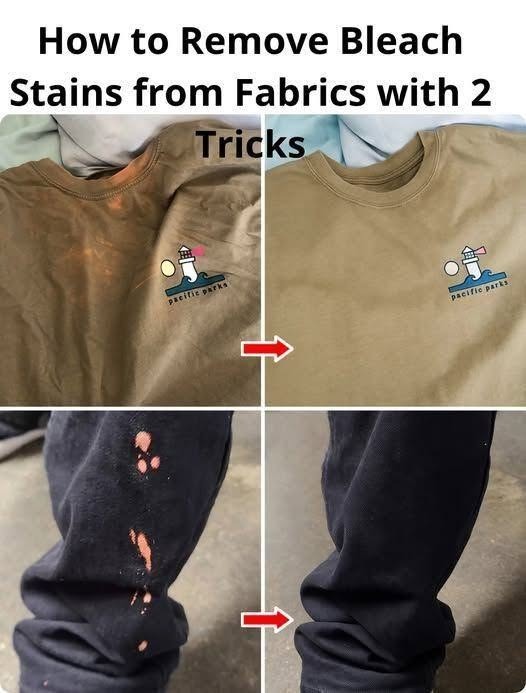
How to Fix Bleach Stains on Clothes: 2 Simple Tricks That Actually Help
Have you ever accidentally spilled bleach on your favorite shirt, trousers, or sweatshirt? If so, you probably know how frustrating it can be to discover orange, pink, yellow, or white patches on clothing you love.
Bleach is one of the toughest household cleaning products because it doesn’t simply leave a stain on fabric. Instead, it removes or changes the original color of the material, sometimes leaving permanent discoloration.
But before throwing away your favorite clothes, there are two simple tricks worth trying. With the right products and a little patience, you may be able to restore the appearance of damaged garments and make those unwanted marks much less noticeable.
Let’s take a closer look!
Why Does Bleach Discolor Clothes?
Bleach is commonly used to whiten laundry, disinfect surfaces, and remove stubborn stains. However, when it accidentally touches colored fabrics, it can break down the dyes responsible for their original color.
Depending on the material and the dye, the affected area may turn orange, pink, reddish, yellow, or completely white.
Unfortunately, ordinary laundry detergent cannot reverse this process because the color has already been removed or chemically altered.
That’s why the best solution is usually to restore the missing color rather than trying to wash the mark away.
Trick #1: Restore the Color Using Fabric Dye
One of the best options for dealing with noticeable bleach marks is fabric dye.
This method is particularly useful when the damaged area is relatively large or when several bleach spots have appeared on the same garment.
What You’ll Need
Fabric dye that matches the original clothing color
A small container, if required
Protective gloves
A clean sponge or applicator
Water, according to the dye instructions
How to Do It
Step 1: Check the garment’s care label to identify the fabric material.
Step 2: Purchase a fabric dye designed for that particular material. Cotton, polyester, wool, and other fabrics may require different types of dye.
Step 3: Prepare the dye according to the manufacturer’s instructions.
Step 4: Test the color on a hidden section of the garment before applying it to the damaged area.
Step 5: Carefully apply the dye to the discolored patches, following the product instructions.
Step 6: Allow the color to develop for the recommended time.
Step 7: Rinse or wash the garment as directed and allow it to dry.
Why This Trick Can Work
Fabric dye adds color back to the fibers, helping disguise areas where bleach has removed the original pigment.
For the most natural result, choose a shade as close as possible to the original garment color.
Trick #2: Cover Small Bleach Spots With a Fabric Marker
If you only have a few small bleach marks, you may not need to dye the entire garment.
A fabric marker can be a practical and affordable alternative, especially for dark-colored clothing such as black trousers, navy sweatshirts, and brown shirts.
What You’ll Need
A fabric marker matching the garment
A clean, dry surface
A piece of cardboard
How to Do It
Step 1: Place the garment on a flat surface and make sure the affected area is completely dry.
Step 2: Put a piece of cardboard underneath the damaged section to prevent the marker from transferring to the other side.
Step 3: Choose a fabric marker that closely matches the original color.
Step 4: Gently apply the marker to the bleach spots.
Step 5: Allow the ink to dry before applying another light layer if necessary.
Step 6: Follow the manufacturer’s instructions for setting the color and washing the garment.
A Useful Tip
Avoid applying too much ink at once. Several thin layers usually produce a more natural-looking result than one heavy application.
Always test the marker on a hidden section first because some fabrics absorb color differently.
What If the Bleach Damage Is Too Large?
Sometimes bleach damage covers a large part of a garment. In that situation, covering each individual spot may not produce a satisfactory result.
Here are a few additional ideas:
Dye the entire garment: This may help create a more uniform appearance.
Add decorative patches: Patches can cover larger damaged areas while giving clothing a new look.
Try embroidery: Small embroidered designs can disguise bleach spots on suitable fabrics.
Create a tie-dye effect: For garments that can be safely recolored, a creative pattern may turn accidental damage into a new design.
Can Vinegar, Baking Soda, or Detergent Remove Bleach Marks?
Many people recommend household ingredients such as vinegar, baking soda, and laundry detergent for removing bleach stains.
However, these products cannot restore color that bleach has already removed.
Using additional chemicals can also damage fabrics further or create dangerous reactions.
Never mix bleach with vinegar, ammonia, acids, or other cleaning products. If bleach has accidentally splashed onto clothing, rinse the affected area thoroughly with plenty of cool water.
How to Prevent Bleach Stains on Your Clothes
A few simple precautions can help protect your favorite garments:
Wear old clothing when cleaning with bleach.
Keep colored laundry away from bleach products.
Follow the manufacturer’s dilution instructions.
Use protective gloves when handling bleach.
Store cleaning products safely.
Never pour concentrated bleach directly onto colored fabrics.
Rinse accidental splashes promptly.
Frequently Asked Questions
- Can bleach stains be completely removed?
Usually, no. Bleach removes or changes fabric dye rather than simply depositing a removable stain. However, fabric dye or fabric markers may help restore the appearance.
- Does baking soda remove bleach stains?
No. Baking soda cannot replace the color that bleach has removed from fabric.
- Can black clothes be repaired after bleach damage?
Yes, sometimes. A black fabric marker or suitable black fabric dye may help cover orange or reddish bleach marks.
- Is fabric dye suitable for every type of clothing?
No. Different materials require different dyes. Always check the garment’s fabric composition and the dye manufacturer’s instructions.
- Should I wash clothes immediately after a bleach accident?
Rinse the affected area promptly with plenty of cool water, while following appropriate safety precautions. Do not mix bleach with other household chemicals.
Final Thoughts
Bleach accidents can be disappointing, especially when they happen to your favorite clothes. However, a damaged garment doesn’t always have to end up in the trash.
Fabric dye can help restore larger discolored areas, while fabric markers may be useful for covering small spots.
The most important thing is to remember that bleach marks are usually areas of lost color, not ordinary stains. Choosing the right repair method for your fabric can make a big difference.
Next time bleach accidentally damages your clothes, try one of these two simple tricks before giving up on your favorite outfit!



Comments